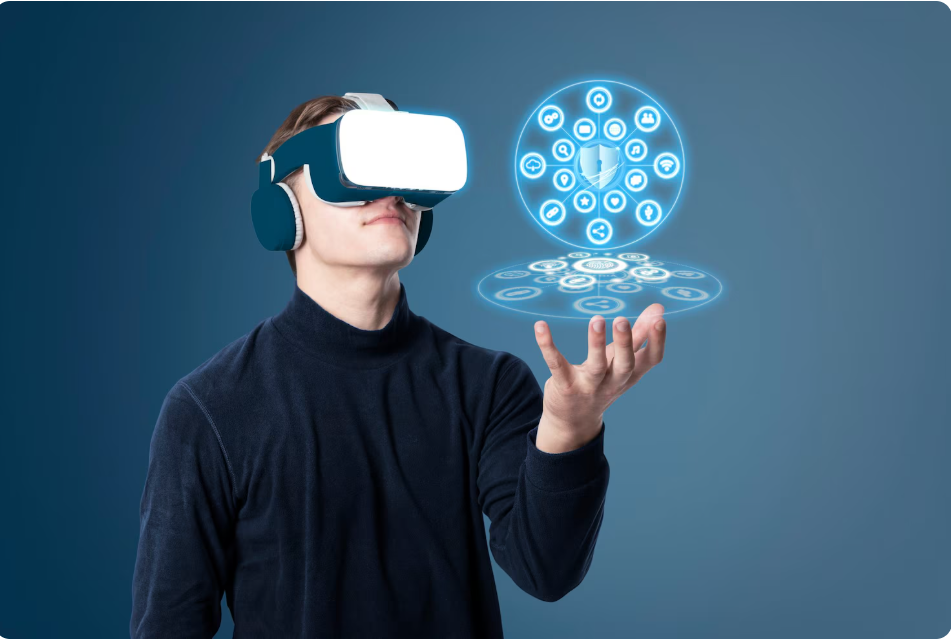
Augmented Reality (AR) is changing how people interact with their surroundings by blending digital elements with the real world. Unlike virtual reality, which creates a fully digital environment, Augmented Reality (AR) enhances what users already see by adding computer generated images, sounds, or information in real time. This technology has moved beyond science fiction and is now widely used in daily life, business, education, and entertainment.
Understanding Augmented Reality (AR)
Augmented Reality (AR) is a technology that overlays digital content onto the physical environment using devices such as smartphones, tablets, smart glasses, or headsets. It works by using cameras, sensors, and software to recognize the real world and place virtual objects accurately within it. These objects appear as if they are part of the real environment, allowing users to interact with both physical and digital elements at the same time. This seamless integration is what makes Augmented Reality (AR) unique and powerful.
Key Technologies Behind Augmented Reality (AR)
Several technologies work together to make Augmented Reality (AR) possible. Computer vision helps devices understand and interpret the real world by identifying surfaces, objects, and movement. Sensors such as gyroscopes and accelerometers track the position and orientation of the device. Advanced software platforms process this data and render digital content instantly. Cloud computing and artificial intelligence further enhance Augmented Reality (AR) by enabling complex data processing and more realistic experiences.
Applications of Augmented Reality (AR) in Daily Life
Augmented Reality (AR) has become part of everyday life through mobile applications and smart devices. Navigation apps use AR to display directions directly on real world streets. Social media platforms use filters and effects that rely on AR technology. In retail, customers can preview furniture in their homes or try on clothing and accessories virtually. These practical uses show how Augmented Reality (AR) improves convenience and decision making.
Role of Augmented Reality (AR) in Education
Education has been greatly enhanced by Augmented Reality (AR). Students can explore interactive 3D models of historical landmarks, human anatomy, or scientific concepts. This visual and hands on approach improves understanding and engagement. Teachers use AR to create immersive lessons that make complex topics easier to grasp. By combining learning with interaction, Augmented Reality (AR) helps students retain information more effectively.
Augmented Reality (AR) in Business and Industry
Businesses are increasingly adopting Augmented Reality (AR) to improve efficiency and customer experience. In manufacturing, AR assists workers by displaying instructions and safety information directly on equipment. In marketing, brands use AR campaigns to engage customers in creative and memorable ways. Real estate professionals use Augmented Reality (AR) to offer virtual property tours, saving time for both buyers and sellers. These applications demonstrate how AR adds value across industries.
Entertainment and Gaming with Augmented Reality (AR)
The entertainment industry has embraced Augmented Reality (AR) to create interactive and immersive experiences. AR based games encourage players to explore real world locations while interacting with virtual characters and objects. Museums and theme parks use AR to bring exhibits and attractions to life. By merging storytelling with real environments, Augmented Reality (AR) offers a new level of engagement for audiences.
Challenges Facing Augmented Reality (AR)
Despite its many benefits, Augmented Reality (AR) faces certain challenges. Technical limitations such as battery life, device compatibility, and processing power can affect performance. Privacy concerns also arise when cameras and location data are constantly in use. Developers must address these issues to ensure secure and reliable AR experiences. As technology improves, many of these challenges are expected to be reduced.
Future of Augmented Reality (AR)
The future of Augmented Reality (AR) looks promising as technology continues to advance. Improved hardware, faster networks, and smarter software will lead to more realistic and accessible AR experiences. Industries such as healthcare, tourism, and training are expected to benefit significantly. As adoption grows, Augmented Reality (AR) will become an essential tool for communication, learning, and innovation.
Conclusion
Augmented Reality (AR) is transforming how people interact with the world by combining digital information with real environments. Its applications across education, business, entertainment, and daily life highlight its growing importance. As technology evolves, Augmented Reality (AR) will continue to shape the future, offering richer experiences and new possibilities for individuals and organizations alike.