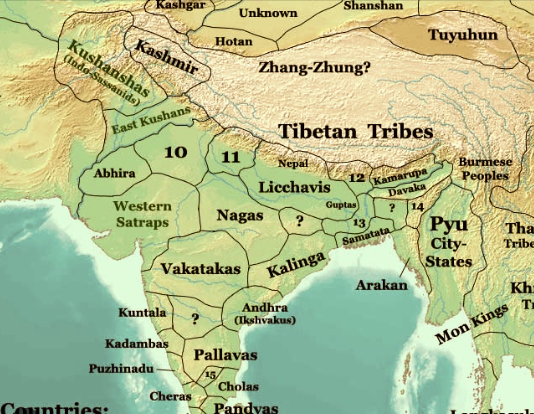
The naga empire refers to a group of ancient ruling dynasties known as the Naga rulers, who governed different parts of northern and central India during the period following the decline of the Kushan Empire and before the rise of the Gupta Empire. Although historians generally describe the Nagas as several regional dynasties rather than a single unified empire, they played an important role in India’s political history between the second and fourth centuries CE.
Their rule contributed to regional governance, economic development, and the transition toward the classical age of ancient India.
Naga Empire Quick Overview
| Category | Details |
|---|---|
| Historical Period | Approximately 2nd–4th Century CE |
| Region | Northern and Central India |
| Major Centers | Padmavati, Mathura, Vidisha |
| Historical Significance | Regional Dynasties Before the Gupta Empire |
| Known For | Political Administration and Regional Rule |
What Was the Naga Empire?
The term naga empire is commonly used to describe the Naga dynasties that controlled various kingdoms across northern and central India during ancient times. Rather than functioning as one centralized empire, the Nagas governed several important regional territories and exercised political influence during a transitional period in Indian history.
Historical evidence for these rulers comes from inscriptions, coins, and literary references that help scholars reconstruct their political and economic activities.
Why People Search for Naga Empire
Many readers search naga empire while studying ancient Indian history or preparing for competitive examinations.
Common reasons include:
- Ancient Indian kingdoms
- Regional dynasties
- Gupta period background
- Historical rulers
- Archaeological discoveries
- Indian political history
The Nagas remain an important topic for understanding India’s early historical development.
Historical Background
Following the weakening of the Kushan Empire, several regional kingdoms emerged across northern India.
During this period, the naga empire became associated with ruling families that established authority over important urban centers while competing with neighboring powers for regional influence.
This era witnessed significant political change before the emergence of the Gupta Empire.
Important Centers of Naga Rule
Historical records connect the Naga rulers with several important cities.
Frequently mentioned centers include:
- Padmavati
- Mathura
- Vidisha
- Kantipuri
These locations became administrative and commercial centers under various Naga dynasties.
Political Organization
The naga empire consisted of regional kingdoms governed by local rulers rather than one centralized imperial government.
Important characteristics included:
- Regional administration
- Independent ruling families
- Military organization
- Urban governance
- Coin production
This political structure reflected the diverse landscape of ancient northern India during the period.
Economy and Trade
Trade remained an important part of economic life under the Naga rulers.
Economic activities included:
- Agriculture
- Regional trade
- Local markets
- Coin circulation
- Craft production
Archaeological discoveries of Naga coins indicate active commercial systems within their territories.
Coins of the Naga Dynasties
Coins provide valuable historical evidence for understanding the naga empire.
Historians study these coins to learn about:
- Rulers
- Political authority
- Religious symbols
- Economic activity
- Regional influence
Numismatic evidence remains one of the most important sources for reconstructing Naga history.
Religion and Culture
Like many ancient Indian rulers, the Naga dynasties supported religious traditions that were prominent during their time.
Historical evidence suggests connections with:
- Hindu traditions
- Temple patronage
- Religious symbolism
- Cultural development
Religious practices often appeared on coins and inscriptions issued during their rule.
Relationship With the Gupta Empire
One reason the naga empire receives historical attention is its connection with the rise of the Gupta Empire.
Several Naga territories eventually came under Gupta influence as political power shifted during the fourth century CE. This transition helped shape the beginning of one of ancient India’s most influential historical periods.
Understanding this relationship provides important context for studying early Indian political history.
Historical Sources About the Naga Empire
Most knowledge about the naga empire comes from archaeological discoveries rather than detailed historical records.
Important historical sources include:
- Ancient coins
- Stone inscriptions
- Archaeological excavations
- Literary references
- Gupta-period records
Historians compare these sources to better understand the political structure, economy, and influence of the Naga dynasties.
Legacy of the Naga Dynasties
Although the naga empire did not become a long-lasting centralized empire like the Mauryas or Guptas, the Naga rulers contributed significantly to regional political stability during an important transitional period in Indian history.
Their legacy includes:
- Regional governance
- Urban development
- Coinage traditions
- Political continuity
- Cultural contributions
These achievements helped shape the historical landscape before the rise of the Gupta Empire.
Importance in Ancient Indian History
Students of ancient Indian history frequently study the naga empire because it represents a key stage between two major historical periods.
The Naga dynasties help historians understand:
- Political fragmentation after the Kushans
- Rise of regional kingdoms
- Development of early Indian administration
- Expansion of later Gupta influence
Their role provides valuable historical context for understanding the evolution of ancient Indian civilization.
Archaeological Discoveries
Archaeology continues to improve our understanding of the Naga rulers.
Researchers examine:
- Ancient settlements
- Coins
- Sculptures
- Temple remains
- Historical inscriptions
New discoveries occasionally provide additional information about regional administration and cultural development during the Naga period.
Why the Naga Empire Still Matters
Interest in the naga empire remains strong among historians, students, and competitive examination candidates because the dynasty occupies an important place in India’s political development.
Studying the Naga rulers helps explain how regional kingdoms contributed to the formation of larger political powers that later unified significant parts of the Indian subcontinent.
Explore More History Guides With Editoriala.com
If you are researching the naga empire, visit Editoriala.com for informative articles covering ancient history, world civilizations, archaeology, historical figures, education, government, and cultural heritage. Editoriala.com publishes research-based guides that help readers better understand important historical events and civilizations from around the world.
Final Thoughts
The naga empire represents an important chapter in ancient Indian history. Although historians generally recognize the Nagas as several regional dynasties rather than a single unified empire, their political influence, economic activity, and regional administration played a significant role during the period between the decline of the Kushan Empire and the rise of the Gupta Empire.
Today, archaeological evidence, inscriptions, and ancient coinage continue to expand our understanding of these rulers, making the Naga dynasties an important subject for anyone interested in India’s early historical development.
Frequently Asked Questions
What was the Naga Empire?
The naga empire generally refers to the Naga dynasties that ruled parts of northern and central India between approximately the second and fourth centuries CE.
Was the Naga Empire a unified empire?
Most historians consider the Nagas to have been several regional ruling dynasties rather than one centralized empire.
Where was the Naga Empire located?
The Naga rulers governed territories in northern and central India, including important centers such as Padmavati, Mathura, and Vidisha.
How do historians know about the Naga rulers?
Historical knowledge comes primarily from coins, inscriptions, archaeological discoveries, and references in later historical records.
What happened to the Naga dynasties?
Many Naga territories gradually came under the influence and control of the expanding Gupta Empire during the fourth century CE.
Why is the Naga Empire important?
The naga empire is important because it represents a significant transitional period in ancient Indian political history before the rise of the Gupta Empire.
What evidence survives from the Naga period?
Coins, inscriptions, archaeological sites, sculptures, and historical references remain the primary sources for studying the Naga dynasties.