Launching a successful product requires much more than a great idea. Businesses must research customer needs, evaluate market demand, design practical solutions, test prototypes, and continuously improve their offerings after launch. This structured approach is known as the product development life cycle, a framework that helps organizations transform concepts into successful products while minimizing risk and maximizing customer satisfaction.
Whether a company develops software, consumer electronics, medical devices, household goods, or digital services, following a well-defined product development life cycle improves planning, communication, resource allocation, and decision-making. Instead of relying on assumptions, organizations use this process to validate ideas, collect feedback, and refine products before investing significant resources.
The product development life cycle also supports collaboration between marketing, engineering, design, manufacturing, quality assurance, and customer support teams. Every department contributes to creating products that solve real customer problems while meeting business objectives.
This guide explains every stage of the product development life cycle, its benefits, common challenges, practical examples, and best practices that organizations can use to improve their product development process.
What Is Product Development Life Cycle?
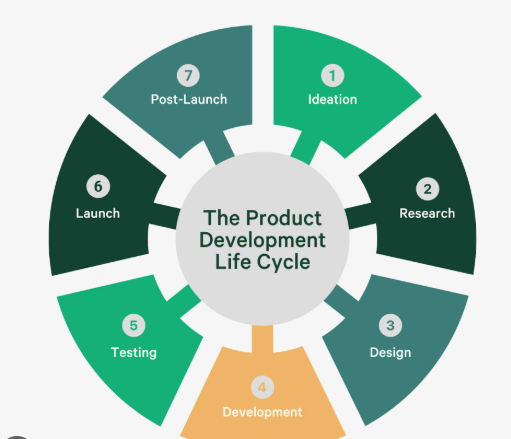
The product development life cycle refers to the complete process of planning, designing, developing, testing, launching, and improving a product. It provides a structured roadmap that guides organizations from the initial concept to the final product available in the market.
Although the exact stages may vary depending on the industry, most businesses follow a similar sequence to reduce uncertainty and improve efficiency.
A successful product development life cycle focuses on customer needs, innovation, quality, and continuous improvement rather than simply creating new products.
Why Product Development Life Cycle Is Important
A structured product development process offers several advantages for businesses of all sizes.
Product Development Life Cycle Reduces Business Risk
Careful planning and testing help identify problems before large investments are made.
Product Development Life Cycle Improves Product Quality
Regular reviews and testing ensure products meet customer expectations and quality standards.
Product Development Life Cycle Supports Better Collaboration
Different teams work together throughout the development process, improving communication and efficiency.
Product Development Life Cycle Encourages Innovation
Organizations can evaluate multiple ideas before selecting the most promising solution.
Product Development Life Cycle Increases Customer Satisfaction
Products developed through continuous customer feedback are more likely to meet market needs.
Product Development Life Cycle Stages
Most organizations divide the product development life cycle into several key stages.
Product Development Life Cycle Stage 1 Idea Generation
Every product begins with an idea.
Ideas may come from:
- Customer feedback
- Employee suggestions
- Market research
- Competitor analysis
- Technological innovation
- Industry trends
The objective is to identify opportunities that solve genuine customer problems.
Product Development Life Cycle Stage 2 Market Research
Before investing resources, businesses evaluate whether customers actually need the proposed product.
Market research may include:
- Customer surveys
- Interviews
- Focus groups
- Industry reports
- Competitor analysis
- Demand forecasting
Understanding the market helps organizations avoid developing products with limited commercial potential.
Product Development Life Cycle Stage 3 Product Planning
After validating the idea, teams begin planning.
Planning activities often include:
- Defining objectives
- Identifying target customers
- Estimating costs
- Creating project timelines
- Allocating resources
- Assessing risks
A clear roadmap improves project management throughout development.
Product Development Life Cycle Stage 4 Product Design
Design transforms concepts into practical solutions.
This stage may involve:
- Wireframes
- Sketches
- User interface design
- Engineering drawings
- User experience planning
- Functional specifications
Good design balances customer needs, technical feasibility, and business objectives.
Product Development Life Cycle Stage 5 Prototype Development
A prototype allows teams to evaluate the product before full production.
Benefits include:
- Testing functionality
- Identifying design flaws
- Collecting stakeholder feedback
- Reducing development risks
- Improving usability
Prototypes often undergo several revisions before final approval.
Product Development Life Cycle Stage 6 Product Testing
Testing is one of the most important stages.
Organizations evaluate:
- Performance
- Reliability
- Security
- Compatibility
- User experience
- Quality
Testing helps ensure the final product performs as expected under different conditions.
Product Development Life Cycle Stage 7 Product Launch Preparation
Before launch, businesses finalize marketing strategies, production planning, pricing, customer support, and distribution channels.
Successful launch preparation ensures customers receive a positive first impression.
Product Development Life Cycle Challenges
Even experienced organizations encounter obstacles during development.
Common challenges include:
Changing Customer Expectations
Customer preferences may evolve during long development projects.
Budget Limitations
Unexpected expenses can affect project timelines and profitability.
Technical Difficulties
Engineering challenges may require redesigns or additional testing.
Market Competition
Competitors may introduce similar products before launch.
Communication Issues
Poor collaboration between departments can delay progress.
Organizations that monitor risks continuously are better positioned to overcome these challenges.
Product Development Life Cycle Best Practices
Organizations that consistently deliver successful products often follow proven development practices. These strategies help reduce delays, improve collaboration, and increase the likelihood of market success.
Product Development Life Cycle Best Practice Focus on Customer Needs
Every decision should begin with the customer. Businesses that understand user problems can build products that provide real value rather than features customers rarely use.
Useful methods include:
- Customer interviews
- Surveys
- Product reviews
- Market research
- User testing
Product Development Life Cycle Best Practice Build Cross-Functional Teams
Successful product development depends on collaboration between different departments.
Typical teams include:
- Product management
- Design
- Engineering
- Marketing
- Sales
- Customer support
- Quality assurance
Early communication helps prevent misunderstandings later in the project.
Product Development Life Cycle Best Practice Test Early and Often
Testing should occur throughout development instead of waiting until the final stage.
Frequent testing helps identify:
- Design issues
- Performance problems
- Usability concerns
- Compatibility errors
Finding issues early is generally less expensive than correcting them after launch.
Product Development Life Cycle Best Practice Measure Performance
Organizations should establish measurable goals before development begins.
Common performance indicators include:
- Customer satisfaction
- Product adoption
- Revenue growth
- Customer retention
- Defect rates
- Time to market
These measurements help teams evaluate project success and identify improvement opportunities.
Product Development Life Cycle Models
Businesses may choose different development approaches depending on project requirements.
Waterfall Model
The Waterfall model follows a sequential process where one stage is completed before the next begins.
It works well when project requirements are clearly defined.
Agile Model
Agile development emphasizes continuous improvement through short development cycles.
Teams regularly gather customer feedback and make adjustments throughout development.
Iterative Model
The Iterative model gradually improves a product through multiple development cycles.
Each version builds upon lessons learned from previous releases.
Hybrid Model
Many organizations combine traditional planning with Agile development to achieve greater flexibility while maintaining project control.
Product Development Life Cycle in Different Industries
The development process varies depending on the industry.
Software Industry
Software companies often release regular updates after launch based on customer feedback.
Manufacturing Industry
Manufacturers focus heavily on engineering validation, production planning, and quality assurance before commercial release.
Healthcare Industry
Medical products require extensive testing, documentation, regulatory approval, and safety verification.
Consumer Products
Companies developing household or retail products often conduct extensive customer research before manufacturing.
Although industries differ, the overall objective remains the same: delivering valuable products to customers.
Product Development Life Cycle Example
Imagine a company developing a fitness tracking smartwatch.
The process might follow these steps:
- Identify customer demand for affordable health tracking.
- Research competing products.
- Design hardware and software.
- Build working prototypes.
- Test battery life, sensors, and durability.
- Improve the design based on feedback.
- Launch marketing campaigns.
- Release the product.
- Monitor customer reviews and provide software updates.
This example demonstrates how each stage contributes to a successful launch.
Product Development Life Cycle Tools
Modern organizations use many digital tools to improve project management and collaboration.
Common categories include:
- Project management software
- Design platforms
- Product roadmaps
- Collaboration tools
- Documentation systems
- Customer feedback platforms
- Analytics software
Selecting appropriate tools depends on project size and organizational requirements.
Product Development Life Cycle Common Mistakes
Many development projects encounter avoidable problems.
Common mistakes include:
Ignoring Customer Feedback
Developing products without understanding customer needs increases the risk of poor market acceptance.
Poor Planning
Unclear objectives often lead to delays and unnecessary costs.
Inadequate Testing
Insufficient testing may allow defects to reach customers.
Weak Communication
Departments working independently can create duplicated work and inconsistent priorities.
Rushing Product Launches
Launching before a product is fully prepared may damage customer trust and brand reputation.
Avoiding these mistakes improves both product quality and business performance.
Product Development Life Cycle Future Trends
Product development continues evolving as technology advances.
Important trends include:
- Artificial intelligence supporting design decisions
- Data-driven product planning
- Greater automation
- Cloud-based collaboration
- Sustainable product development
- Faster customer feedback collection
- Digital product simulation
Organizations that adapt to these trends can respond more effectively to changing customer expectations.
For entrepreneurs, product managers, software developers, designers, and business professionals interested in the product development life cycle, product strategy, innovation, business planning, and modern development practices, editoriala.com provides practical educational content designed to simplify complex business concepts through well-structured, informative, and reader-friendly articles that support continuous learning and professional growth.
Final Thoughts
The product development life cycle provides a structured framework that transforms ideas into successful products through careful planning, research, design, testing, launch, and continuous improvement. Organizations that follow a customer-focused development process are better positioned to reduce risk, improve product quality, and respond to changing market demands. Although every industry applies the framework differently, the underlying goal remains consistent: delivering products that solve real problems while supporting long-term business success. Continuous learning, effective collaboration, and regular customer feedback remain essential throughout every stage of the development journey.
Frequently Asked Questions
What is the product development life cycle?
The product development life cycle is the structured process of planning, designing, developing, testing, launching, and improving a product.
Why is the product development life cycle important?
It helps organizations reduce risk, improve product quality, organize development activities, and create products that better meet customer needs.
What are the main stages of the product development life cycle?
The primary stages typically include idea generation, market research, planning, design, prototype development, testing, launch, and post-launch improvement.
Which industries use the product development life cycle?
Software, manufacturing, healthcare, consumer goods, technology, automotive, education, and many other industries use structured product development processes.
What is the difference between Agile and Waterfall in the product development life cycle?
Waterfall follows a sequential process, while Agile emphasizes continuous improvement through smaller development cycles and regular customer feedback.
How can businesses improve the product development life cycle?
Businesses can improve the process by understanding customer needs, encouraging collaboration, testing continuously, measuring performance, and making data-driven decisions throughout product development.