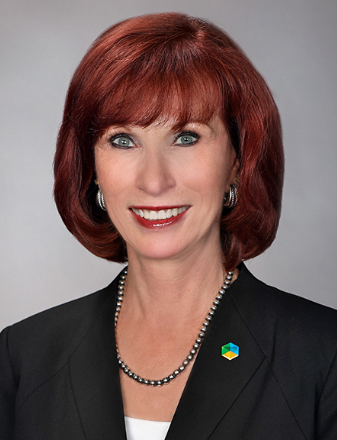
The search for Julie Dill Tampa has gained attention from readers looking for clear information about a professional connected with the Tampa Bay region. However, this keyword requires careful research because multiple people may share the name Julie Dill. The most credible professional match based on publicly available information is Julie Dill, MHA, an experienced healthcare administrator working in medical education.
Julie Dill serves as Director of the Office of Medical Education at Johns Hopkins All Children’s Hospital in St. Petersburg, Florida. St. Petersburg is part of the wider Tampa Bay region, which may explain why people use Tampa when searching for her online.
Her professional career is strongly connected with Graduate Medical Education, also known as GME. Before joining Johns Hopkins All Children’s Hospital in June 2024, she spent 17 years in administrative positions related to medical training programs.
Her experience includes training program coordination, department management, consulting, accreditation, project management, process improvement, and procedure standardization. Rather than focusing on unsupported personal details, this article explores the verified professional background associated with Julie Dill Tampa and explains the importance of her work in healthcare education.
Who Is Julie Dill in the Tampa Bay Area
Julie Dill, MHA, is a healthcare administration professional with extensive experience in Graduate Medical Education.
She currently serves as Director of the Office of Medical Education at Johns Hopkins All Children’s Hospital. The hospital is based in St. Petersburg, Florida, within the Tampa Bay region.
This geographic distinction is important. Tampa and St. Petersburg are separate cities, but both are closely associated with the wider Tampa Bay metropolitan area. People searching for professionals in the region may use Tampa as a broader location term.
Public information about Julie Dill primarily focuses on her career and education. She is not presented as a celebrity or entertainment personality. Instead, her professional background is connected with the administrative systems that support physician education and training.
Her current leadership role follows years of specialized GME experience. This makes her professional journey particularly relevant to people interested in healthcare administration, medical education, and institutional leadership.
Julie Dill Tampa Quick Overview
| Category | Available Information |
|---|---|
| Full name | Julie Dill |
| Professional credential | MHA |
| Industry | Healthcare administration |
| Specialization | Graduate Medical Education |
| Current position | Director of the Office of Medical Education |
| Organization | Johns Hopkins All Children’s Hospital |
| Workplace city | St. Petersburg, Florida |
| Regional connection | Tampa Bay |
| Joined current organization | June 2024 |
| Previous GME experience | 17 years |
| Bachelor’s degree | Bachelor of Arts in Journalism |
| Master’s degree | Master of Healthcare Administration |
The available information provides a strong professional overview. Personal details that are not supported by credible public sources should not be assumed or presented as fact.
Why Is Julie Dill Connected With Tampa
One of the biggest questions surrounding the Julie Dill Tampa keyword is the location connection.
Julie Dill’s verified professional role is associated with Johns Hopkins All Children’s Hospital in St. Petersburg. She should not simply be described as working in Tampa without explaining the regional context.
Tampa Bay is a broader geographic area that includes Tampa, St. Petersburg, Clearwater, and surrounding communities. Because Tampa is one of the most recognized cities in the region, online searches sometimes use the city name for people and organizations located elsewhere in Tampa Bay.
Johns Hopkins All Children’s Hospital also has a wider regional presence. Its healthcare network serves families across several Florida communities.
Therefore, the Tampa connection is best understood as regional rather than an exact description of her primary workplace.
This explanation is important for search accuracy. Quality content should answer the keyword while also correcting possible geographic confusion instead of forcing a misleading connection.
Julie Dill’s Role in Medical Education
Julie Dill joined Johns Hopkins All Children’s Hospital in June 2024 as Director of the Office of Medical Education.
Medical education is an essential part of teaching hospitals and healthcare institutions involved in physician training.
The Office of Medical Education helps support organized educational systems. Hospitals with residency and fellowship programs need reliable administrative processes for training, program operations, documentation, institutional coordination, and accreditation-related responsibilities.
A director working in this environment requires strong organizational and leadership skills.
Julie Dill’s professional experience closely matches these requirements. Her background includes many years in Graduate Medical Education administration and work involving training programs and hospital systems.
Her areas of professional expertise include training program organization, leadership, process improvement, project management, and procedure standardization.
These skills are valuable because medical education involves multiple departments and professional groups. Effective administration can help create clear systems that support program leaders, faculty members, residents, fellows, and institutional teams.
What Is Graduate Medical Education
Graduate Medical Education refers to the formal training physicians complete after graduating from medical school.
Residency is one of the most recognized forms of GME. During residency, doctors receive supervised clinical training in a selected medical specialty.
Some physicians later complete fellowships to gain advanced training in a subspecialty.
These programs require more than clinical teaching.
Healthcare institutions need organized administrative systems to support schedules, recruitment, evaluations, documentation, accreditation, and program operations.
Graduate Medical Education administrators play an important role in these systems.
They may work closely with program directors, faculty members, residents, fellows, and hospital leadership.
Strong organization is essential because training programs operate within detailed requirements and recurring timelines.
Julie Dill’s 17 years of experience in GME administration provide important context for her current leadership position.
Her career reflects long-term specialization in a field that supports the education and development of physicians.
Julie Dill’s 17 Years of GME Experience
Before joining Johns Hopkins All Children’s Hospital, Julie Dill spent 17 years working in administrative positions within Graduate Medical Education.
This is one of the most significant verified facts about her professional background.
Experience developed over nearly two decades can provide a deep understanding of medical training operations.
Her official professional profile mentions experience as a Training Program Coordinator for medicine and surgical subspecialties.
Training program coordination can involve complex organizational responsibilities. Medical education programs need consistent communication, reliable documentation, and carefully managed timelines.
Program coordinators may support leadership and trainees while helping maintain daily administrative processes.
Julie Dill also gained experience as a Department Manager.
Department-level management can provide a broader understanding of organizational operations. It may involve coordinating people, projects, communication, and administrative priorities.
Her professional development therefore appears to include both specialized program experience and broader management responsibilities.
This combination is relevant to a director-level position because leadership often requires understanding detailed processes while maintaining a wider institutional perspective.
Experience With Medical Training Programs
Julie Dill’s experience includes work with medicine and surgical subspecialty training programs.
Different medical specialties can have different educational and administrative needs.
A program connected with a medical specialty may operate differently from a surgical subspecialty program. Training structures, schedules, faculty involvement, and program activities can vary.
Administrative professionals working across different specialties need flexibility.
They must understand common institutional requirements while recognizing that individual programs may require different approaches.
This experience may help develop strong problem-solving skills.
Medical education administrators regularly communicate with people who have different professional responsibilities. Program directors, physicians, trainees, and institutional leaders may approach the same issue from different perspectives.
Effective administrators help organize information and maintain clear processes.
Julie Dill’s experience with multiple types of training programs provides useful context for her later work in consulting and medical education leadership.
It demonstrates a career built through direct involvement with the operational side of physician training.
Her Graduate Medical Education Consulting Background
Another important part of the Julie Dill Tampa professional profile is her consulting experience.
Julie Dill worked as a consultant for a national firm focused on Graduate Medical Education.
Consulting can provide a different professional perspective from working within one hospital or training program.
A consultant may encounter multiple institutions with different systems, challenges, and organizational structures.
According to her professional biography, Dill has experience leading projects across training programs and multiple-hospital systems.
This type of work can require careful project management.
When several hospitals or programs are involved, communication and standardization become more complex. Teams may use different processes or have different operational priorities.
A consultant needs to understand the current situation before recommending or supporting changes.
This can involve identifying problems, organizing project objectives, coordinating stakeholders, and monitoring progress.
Dill’s consulting background appears closely connected with her expertise in process improvement and procedure standardization.
Working across multiple organizations can help professionals identify recurring challenges and understand how administrative systems operate in different environments.
Accreditation Experience in Healthcare Education
Accreditation is an important part of Graduate Medical Education.
Medical training programs and sponsoring institutions operate within established standards and review processes.
Julie Dill’s professional profile highlights extensive experience with accreditation site visits.
Her experience includes program, hospital, and institutional levels.
This is particularly relevant to medical education leadership.
Accreditation-related processes can require detailed preparation, organized documentation, and clear communication.
Administrative teams may help coordinate information and ensure that processes are consistently maintained.
Program-level responsibilities can focus on an individual training program.
Hospital and institutional responsibilities may involve a wider perspective across multiple programs or organizational systems.
Experience at different levels can help a professional understand how individual programs connect with broader institutional responsibilities.
Accreditation should not be treated as a one-time administrative task.
Strong organizations often maintain consistent processes throughout the year.
Dill’s experience in this area complements her focus on standardization and process improvement.
Process Improvement and Professional Leadership
Process improvement is listed as an area of expertise in Julie Dill’s professional background.
The purpose of process improvement is to examine how work is completed and identify opportunities to create better systems.
Healthcare organizations can have complex workflows.
As institutions grow, processes may become outdated or unnecessarily complicated. Different departments may also develop separate methods for completing similar tasks.
A process improvement approach examines these systems carefully.
Leaders may identify delays, duplicated work, unclear responsibilities, or communication problems.
The goal is to create processes that are more organized and reliable.
In medical education, improved processes can help administrative teams manage recurring responsibilities.
Recruitment, onboarding, evaluations, program documentation, and other activities often follow established cycles.
Clear systems can make responsibilities easier to understand.
Julie Dill’s years of GME administration and consulting experience provide a relevant background for this work.
Her current leadership role allows her professional expertise to support the broader medical education environment.
Why Project Management Matters in Her Career
Project management is another important skill associated with Julie Dill.
Healthcare projects can involve many people, departments, and deadlines.
Without a clear structure, important tasks may be delayed or responsibilities may become confusing.
Project management helps define objectives and organize the steps needed to achieve them.
A project leader may establish timelines, assign responsibilities, monitor progress, and respond to challenges.
Julie Dill has experience leading projects involving training programs and multiple-hospital systems.
Multi-hospital projects can be particularly complex.
Each organization may have established procedures and different operational needs.
Successful project leadership requires communication and careful coordination.
These skills are directly relevant to medical education.
A large educational initiative may involve program directors, administrators, faculty members, and institutional leaders.
Strong project management can help keep work organized while maintaining focus on the main objective.
Dill’s experience in this area is another important part of her healthcare leadership background.
Procedure Standardization in Medical Education
Procedure standardization means creating consistent approaches for recurring activities.
This can be valuable in large healthcare organizations.
When multiple teams complete similar tasks in completely different ways, confusion and unnecessary complexity may develop.
Standardization can create clearer expectations.
It may also make employee training easier because procedures are more clearly documented and understood.
In Graduate Medical Education, many administrative responsibilities occur on regular schedules.
Programs may manage recruitment, onboarding, evaluations, and reporting activities throughout the academic cycle.
Consistent procedures can help teams understand what needs to happen and when.
However, standardization does not mean every medical program must operate identically.
Different specialties may have unique requirements.
Effective leadership involves identifying which processes can be standardized while allowing necessary program-specific flexibility.
Julie Dill’s background in different training programs and hospital systems is relevant to this area.
Her accreditation and process improvement experience also supports an understanding of why reliable procedures matter.
Julie Dill’s Educational Background
Julie Dill earned a Bachelor of Arts in Journalism from The Ohio State University.
She later earned a Master of Healthcare Administration from Franklin University.
Her educational path is interesting because journalism and healthcare administration appear to be very different fields.
However, communication skills are highly valuable in administrative leadership.
Journalism education can develop skills related to gathering information, organizing details, writing clearly, and communicating with different audiences.
Healthcare administrators also work with significant amounts of information.
They may need to explain complex procedures, coordinate teams, and communicate organizational expectations.
Her Master of Healthcare Administration provides a more specialized connection with her professional career.
An MHA is a graduate-level qualification focused on healthcare management and administration.
The combination of education and extensive practical experience provides useful context for Dill’s career development.
Her professional path also shows that careers do not always follow a perfectly straight line.
Transferable skills from one educational field can remain valuable in another industry.
The Importance of Medical Education Administrators
Medical education administrators may not receive the same public attention as doctors or hospital executives, but their work is important.
Residency and fellowship programs involve complex administrative systems.
Physicians in training need organized educational environments.
Program directors and faculty members also require reliable administrative support.
Medical education administrators help coordinate these systems.
Their work can involve program operations, documentation, project management, accreditation support, and institutional communication.
At the leadership level, administrators may examine how multiple programs function within a hospital or healthcare system.
This wider perspective can help identify shared challenges and opportunities for improvement.
Julie Dill’s career provides an example of this specialized healthcare profession.
Her experience demonstrates how administrative expertise can develop through years of work with training programs, departments, and hospital systems.
The Julie Dill Tampa search therefore leads to a professional story focused on healthcare education rather than celebrity culture.
Is Julie Dill a Doctor
Available professional information identifies Julie Dill as a healthcare administrator, not a physician.
Her listed credential is MHA, which means Master of Healthcare Administration.
She serves as Director of the Office of Medical Education.
The word medical in a professional title does not automatically mean someone is a doctor.
Healthcare institutions employ professionals from many different backgrounds.
Physicians provide clinical expertise, while administrators support organizational systems and operations.
Julie Dill’s professional specialization is Graduate Medical Education administration.
Her background includes training program coordination, management, consulting, accreditation, project leadership, and process improvement.
These are significant professional responsibilities within healthcare administration.
Accurately describing her role is important.
A quality biography should not assign medical credentials or professional titles that are not supported by reliable information.
What Is Known About Julie Dill’s Personal Life
Publicly available professional information about Julie Dill focuses mainly on her career and education.
Reliable sources do not provide detailed information about her age, date of birth, husband, children, relationships, or private residence.
These details should not be guessed.
This is especially important when writing about a professional who is not primarily a public celebrity.
Some biography websites publish personal claims without identifying reliable evidence.
Repeating those claims can create inaccurate content.
For Julie Dill, the strongest verified information concerns her healthcare administration career.
Her professional experience and education provide enough material to understand her work without creating unsupported personal stories.
Readers should distinguish between publicly documented career information and private details.
Maintaining this distinction improves accuracy and content quality.
Is Julie Dill’s Net Worth Public
Julie Dill’s exact net worth is not publicly confirmed through a reliable financial source.
Her personal assets, liabilities, and income are private.
A professional job title cannot be used to calculate an individual’s net worth accurately.
Compensation for healthcare administration positions can vary based on experience, organization, location, and responsibilities.
Even if a salary estimate were available, salary is not the same as net worth.
Net worth considers the value of assets after liabilities are taken into account.
Without verified personal financial information, publishing an exact number would be speculative.
The search intent around Julie Dill Tampa appears more closely connected with professional identity and career information.
Therefore, focusing on her verified role, education, and medical education experience provides more useful information than inventing a financial estimate.
Avoiding Confusion With Other People Named Julie Dill
Multiple people can share the name Julie Dill.
This creates an important challenge when researching a person online.
A search result for one Julie Dill should not automatically be connected with another person who has the same name.
Location, credentials, employer, and professional title can help distinguish individuals.
For this article, the most relevant professional match is Julie Dill, MHA, associated with Johns Hopkins All Children’s Hospital in the Tampa Bay region.
Her MHA credential and Director of the Office of Medical Education title are useful identifying details.
Readers should use similar context when reviewing online information.
Combining details from unrelated profiles can create serious factual errors.
This is why careful identity verification matters in biography-style SEO content.
The Tampa-related keyword may be broad, but the available professional information supports a healthcare leadership profile connected with the wider Tampa Bay region.
What Her Career Shows About Healthcare Leadership
Julie Dill’s career demonstrates the value of specialized experience in healthcare administration.
She spent 17 years working in Graduate Medical Education administration before joining Johns Hopkins All Children’s Hospital.
Her professional experience includes program coordination, department management, consulting, accreditation, and project leadership.
These roles helped build expertise that is relevant to her current director position.
Her career also shows the importance of continued professional development.
Dill earned an undergraduate degree in journalism before completing a Master of Healthcare Administration.
Her professional specialization developed through education and practical experience.
Healthcare leadership requires more than a job title.
Effective administrators need to understand systems, communicate with different professional groups, and manage complex projects.
Dill’s documented career background reflects these areas.
Her journey provides useful insight into the less visible administrative side of physician education.
Final Thoughts
Julie Dill Tampa is a search term most credibly connected with Julie Dill, MHA, an experienced healthcare administration professional working in the wider Tampa Bay region.
She serves as Director of the Office of Medical Education at Johns Hopkins All Children’s Hospital in St. Petersburg, Florida. She joined the organization in June 2024 after 17 years of experience in Graduate Medical Education administration.
Her professional background includes training program coordination for medicine and surgical subspecialties, department management, GME consulting, accreditation experience, project management, process improvement, and procedure standardization.
Julie Dill earned a Bachelor of Arts in Journalism from The Ohio State University and a Master of Healthcare Administration from Franklin University.
Her publicly documented story is primarily professional. Reliable information about her private life and personal finances is limited, so unsupported details should not be presented as fact.
For people searching Julie Dill Tampa, her healthcare leadership career offers the clearest and most useful context. Her experience highlights the important work medical education administrators perform in supporting organized physician training and institutional education systems.
Frequently Asked Questions
Who is Julie Dill in Tampa?
Julie Dill, MHA, is a healthcare administration professional serving as Director of the Office of Medical Education at Johns Hopkins All Children’s Hospital in the wider Tampa Bay region.
What does Julie Dill do?
She works in medical education administration and has extensive experience in Graduate Medical Education, project management, accreditation, and process improvement.
Does Julie Dill work in Tampa?
Her verified hospital leadership role is connected with Johns Hopkins All Children’s Hospital in St. Petersburg, which is part of the wider Tampa Bay region.
What is Julie Dill’s educational background?
She earned a Bachelor of Arts in Journalism from The Ohio State University and a Master of Healthcare Administration from Franklin University.
Is Julie Dill a doctor?
No verified professional information identifies Julie Dill as a physician. She is a healthcare administrator with an MHA credential and extensive Graduate Medical Education experience.
Read More: Uddhav Thackeray Complete Guide to His Political Career, Leadership, and Shiv Sena