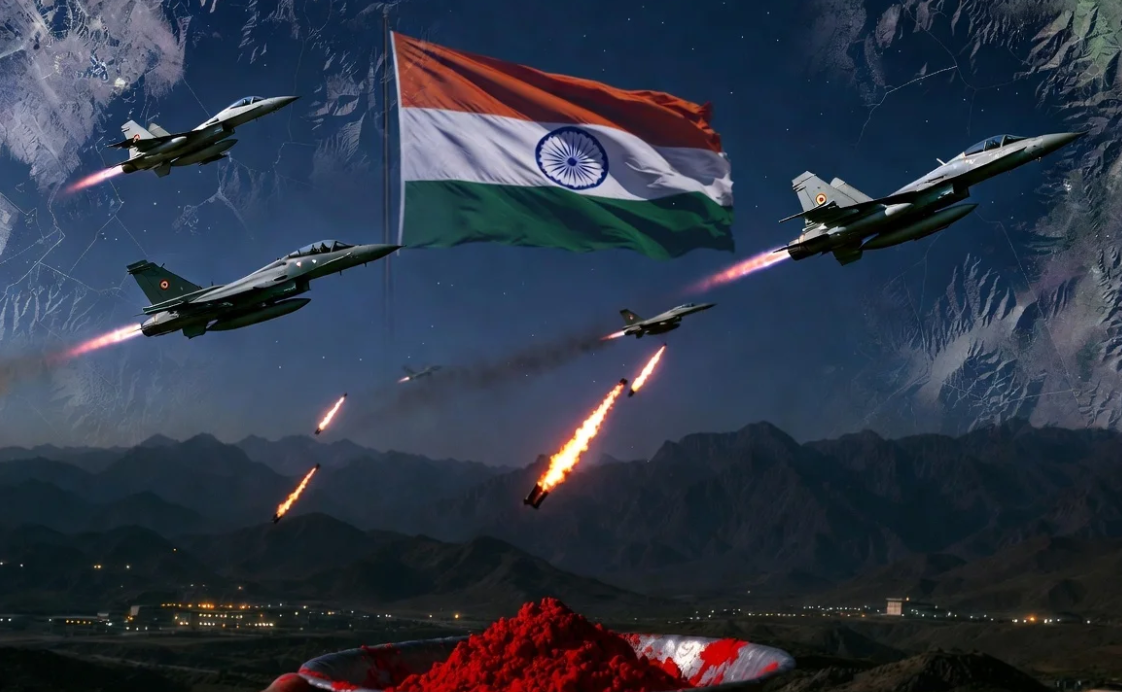
India and Pakistan have experienced several periods of military tension, but the events of May 2025 gained exceptional global attention. Missile strikes, drones, air defence systems, military briefings, and rapidly spreading online claims created a complex information environment. At the Centre of these developments was an Indian military action officially named Operation Sindoor.
The sindoor operation began on May 7, 2025, following the deadly Pahalgam terror attack of April 22. Twenty-six civilians were killed in that attack, including 25 Indian nationals and one Nepali citizen. India later announced a military response aimed at what it identified as terrorist infrastructure in Pakistan and Pakistan-occupied Jammu and Kashmir.
People searching this topic usually want to know why the operation was launched, which sites were targeted, what happened during the following days, and why the name Sindoor was selected. This guide explains the major publicly reported developments, official Indian position, escalation with Pakistan, and wider strategic importance of the operation.
What Was Operation Sindoor
Operation Sindoor was the codename used by the Indian Armed Forces for military strikes launched during the early hours of May 7, 2025.
According to India’s Ministry of Defence, nine sites connected with terrorist infrastructure were targeted. India described the action as focused, measured, and non-escalatory. The initial official announcement also stated that Pakistani military facilities were not targeted during the opening strikes.
| Topic | Key Information |
|---|---|
| Operation | Operation Sindoor |
| Launch date | May 7, 2025 |
| Immediate background | Pahalgam terror attack |
| Pahalgam attack date | April 22, 2025 |
| Initial targets | Nine sites |
| Indian position | Counter-terror operation |
| Initial target type | Terrorist infrastructure |
| Wider escalation | India-Pakistan military exchanges |
The sindoor operation later became connected with a broader period of India-Pakistan military escalation involving drones, missiles, air defence systems, and cross-border firing.
The Pahalgam Attack and Background
The immediate background to Operation Sindoor was the April 22, 2025, attack near Pahalgam in Jammu and Kashmir.
Twenty-six civilians were killed. The attack generated widespread anger across India and renewed national debate about cross-border terrorism and security in Kashmir.
India blamed Pakistan-linked terrorist infrastructure for the attack. Pakistan rejected Indian allegations of involvement and called for an investigation.
In the days following the attack, relations between the two countries deteriorated rapidly. India announced several diplomatic and policy measures. Pakistan responded with its own actions.
The military situation also became increasingly tense along the Line of Control.
India eventually stated that those responsible for the attack would be held accountable. The May 7 strikes represented the military phase of that response.
Understanding this background is essential because Operation Sindoor was officially presented by India as a targeted counter-terror action rather than an unprovoked conventional military campaign.
Why Was It Named Operation Sindoor
The name Sindoor attracted significant attention in India. Sindoor is a traditional red or vermilion powder associated with marriage in many Hindu communities and is commonly worn by married women.
The operation’s name was widely interpreted as symbolically connected with the women who lost their husbands in the Pahalgam attack.
Reports and public discussions highlighted accounts that male tourists had been targeted during the attack. The emotional connection between widowhood, marriage, and sindoor gave the codename powerful symbolic meaning in Indian public discourse.
However, readers should separate widely discussed symbolism from operational military facts. The official name is Operation Sindoor, while interpretations of its emotional meaning have often come from political commentary, media coverage, and public discussion.
The choice of name contributed significantly to the operation’s public visibility and made it one of the most recognised Indian military codenames of recent years.
Nine Sites Targeted on May 7
India officially announced that nine sites were targeted during the opening phase of Operation Sindoor.
The targets were located in Pakistan and Pakistan-occupied Jammu and Kashmir. Indian officials described them as infrastructure connected with terrorist groups and planning activities against India.
The Indian government said multi-agency intelligence was used to identify the locations. According to official accounts, the operation was planned to limit collateral damage and avoid Pakistani military establishments during the initial action.
This distinction was important to India’s public explanation of the strikes. New Delhi presented the operation as a precise response against terror infrastructure.
Pakistan disputed India’s description of the targets and reported civilian casualties. The conflicting claims became a major part of international reporting.
During military confrontations, official statements from opposing governments can differ significantly. Readers should therefore distinguish confirmed announcements, government claims, and independently verified information when reviewing the May 2025 events.
India’s Focused and Measured Strategy
India repeatedly used the words focused, measured, and non-escalatory when describing its initial strikes.
This language was strategically important. India wanted to communicate that its opening action had specific targets and was not designed as a general attack on Pakistan’s military.
The decision not to initially target Pakistani military facilities was presented as evidence of restraint.
At the same time, India warned that any military attack against Indian targets would receive an appropriate response.
The sindoor operation therefore combined military action with strategic messaging. India sought to demonstrate its willingness to strike identified terrorist infrastructure while maintaining that it did not want uncontrolled escalation.
This approach became more difficult as the confrontation continued. Pakistan responded, and both countries reported drone, missile, and military activity.
The conflict then moved beyond the original nine-target strike and entered a more dangerous period of direct military exchanges.
Drone and Missile Activity During the Escalation
The days after May 7 saw increased military activity between India and Pakistan.
Indian officials reported attempted attacks against military targets in northern and western India. The Ministry of Defence stated that Indian air defence systems responded to drones and other aerial threats.
During a May 9 briefing, Indian officials said hundreds of drones had been used across dozens of locations during one night of the confrontation.
India also announced retaliatory action against Pakistani air defence infrastructure.
Pakistan presented a different account of the conflict and claimed it had successfully responded to Indian military actions. Both sides made claims about intercepted weapons, damaged facilities, and military performance.
The large number of rapidly developing reports made independent assessment difficult during the confrontation.
For ordinary readers, the important point is that the conflict expanded quickly from India’s initial strikes against nine identified sites into a wider exchange involving modern aerial warfare technologies.
The Role of India’s Armed Forces
Official Indian accounts emphasised coordination between the Army, Air Force, and Navy during Operation Sindoor.
Modern warfare is increasingly multi-domain. Air defence, electronic systems, intelligence, surveillance, drones, missiles, and traditional military forces must operate with effective communication.
India described the operation as an example of jointness among its armed services.
The Army played an important role along the Line of Control and in responding to cross-border firing. The Air Force was central to aerial operations and air defence activity. The Navy maintained operational readiness in the maritime domain.
Intelligence agencies were also important in identifying the initial targets, according to Indian government information.
This coordinated approach is one reason Operation Sindoor has been discussed in Indian defence analysis. The operation was not publicly presented as the action of one military branch alone.
Instead, official communication highlighted a combined national security and military response.
Air Defence Became a Major Focus
One of the most discussed aspects of the May 2025 confrontation was air defence.
Drones and missiles can create complex threats because they may differ in speed, size, altitude, and flight pattern. Modern air defence therefore requires multiple detection and interception capabilities.
India reported using a layered air defence network during the escalation.
The military also described the use of kinetic and non-kinetic methods against aerial threats. Kinetic interception generally involves physically destroying a target, while non-kinetic methods can include electronic countermeasures.
The confrontation demonstrated why drone defence has become an important military priority.
Relatively small unmanned systems can be used for surveillance, distraction, or attack. Large numbers of drones may also create challenges for defensive networks.
For defence analysts, the sindoor operation became an important case for studying the changing role of unmanned systems and integrated air defence in South Asian military planning.
Information Warfare and Online Misinformation
Social media became another major battlefield during the India-Pakistan confrontation.
Videos, photographs, and dramatic claims spread rapidly across online platforms. Some content was old, incorrectly labelled, or unrelated to the May 2025 events.
Users frequently shared claims before official confirmation was available. This created confusion about aircraft losses, military targets, explosions, and the locations of reported attacks.
Government agencies and fact-checking organisations attempted to challenge false or misleading content.
The situation demonstrated an important feature of modern conflicts. Information can influence public perception almost as quickly as military action.
Readers researching Operation Sindoor should be careful with viral videos and anonymous social media accounts. A high number of shares does not confirm that a claim is accurate.
Dates, original sources, geographic details, and official statements should be compared before accepting dramatic military claims as established facts.
India Pakistan Agreement on May 10
After several days of serious escalation, India and Pakistan agreed on May 10, 2025, to stop military action.
India’s Foreign Secretary stated that the Pakistani Director General of Military Operations contacted the Indian DGMO on the afternoon of May 10.
The two military officials agreed that both sides would stop firing and military action on land, in the air, and at sea from 5 p.m. Indian Standard Time.
The agreement reduced immediate fears of a larger war between two nuclear-armed neighbours.
India later reported violations after the understanding took effect. Pakistan denied responsibility for violating the agreement and expressed commitment to the ceasefire.
Despite competing claims, the direct military confrontation reduced after the intense four-day period.
The agreement showed the importance of military communication channels during a rapidly escalating crisis.
Why Operation Sindoor Was Strategically Important
Operation Sindoor attracted attention because it represented a significant development in India’s publicly stated counter-terror strategy.
India presented the action as evidence that major terrorist attacks could result in military strikes against infrastructure located across the border.
The operation also demonstrated the growing importance of precision weapons, intelligence, drones, electronic systems, and integrated air defence.
Another important factor was strategic communication. India repeatedly explained its target selection and described its opening action as limited.
However, the following military exchanges demonstrated how quickly a targeted strike can lead to wider escalation between heavily armed neighbours.
The operation will likely remain an important subject for defence analysts studying deterrence, crisis management, and military technology.
Its long-term strategic impact cannot be measured only by the number of targets struck. Future India-Pakistan security developments will also influence how historians and defence experts assess the operation.
Global Attention and Diplomatic Concern
The confrontation generated immediate international concern.
India and Pakistan both possess nuclear weapons, so direct military exchanges between the countries are closely monitored by governments around the world.
International leaders called for restraint and a reduction in tensions. Diplomatic activity increased as missile and drone exchanges continued.
The United States and several other countries communicated with Indian and Pakistani officials during the crisis.
There were different public descriptions of the role international diplomacy played in ending the confrontation. India emphasised direct communication between the two countries’ military officials.
The crisis nevertheless demonstrated that India-Pakistan escalation remains a major global security concern.
International attention was not limited to South Asia. Governments and markets monitored the situation because a larger conflict could have significant economic, political, and security consequences.
What Operation Sindoor Revealed About Modern Warfare
The May 2025 events provided several lessons about modern military conflict.
First, precision strike capabilities have become central to limited military operations. Countries increasingly use intelligence and long-range systems to target specific locations.
Second, drones are now a major part of military planning. Large-scale drone activity can challenge air defence networks and create uncertainty.
Third, electronic warfare and non-kinetic defence methods are increasingly important.
Fourth, information warfare can shape public understanding of a conflict. False claims can spread internationally before reliable information becomes available.
Finally, military escalation can develop rapidly. An operation presented as limited may trigger responses that expand the confrontation.
The sindoor operation showed that technology has changed warfare, but crisis management and direct communication remain essential. Advanced weapons do not eliminate the political risks associated with conflict between nuclear-armed countries.
Final Thoughts
The sindoor operation was launched by India on May 7, 2025, after the Pahalgam terror attack that killed 26 civilians. India initially targeted nine sites in Pakistan and Pakistan-occupied Jammu and Kashmir, describing them as terrorist infrastructure.
The following days saw a wider military escalation involving drones, missiles, air defence systems, and cross-border firing. India and Pakistan presented competing accounts of several developments, making careful source verification essential.
On May 10, the military operations directors of both countries agreed to stop firing and military action on land, in the air, and at sea.
Operation Sindoor remains important because of its counter-terror context, symbolic name, use of modern military technology, and impact on India-Pakistan relations. It also demonstrated the speed at which a limited military action can develop into a broader regional security crisis.
Frequently Asked Questions
What was Operation Sindoor?
Operation Sindoor was an Indian military operation launched on May 7, 2025, targeting sites India identified as terrorist infrastructure in Pakistan and Pakistan-occupied Jammu and Kashmir.
Why did India launch Operation Sindoor?
India launched the operation following the April 22, 2025, Pahalgam terror attack, in which 26 civilians were killed.
How many sites were initially targeted?
The Indian Ministry of Defence officially stated that nine sites were targeted during the opening strikes.
Why was the operation called Sindoor?
The name was widely interpreted as symbolically connected with married women who lost their husbands in the Pahalgam attack and the traditional significance of sindoor.
When did India and Pakistan stop military action?
The two countries agreed to stop firing and military action on land, in the air, and at sea from 5 p.m. Indian Standard Time on May 10, 2025.